
The National Institute of Design (NID), Ahmedabad, is honoured to have extended its design services for the ceremonial invitation kit commissioned by Rashtrapati Bhavan for the reception of distinguished guests on the occasion of India’s 77th Republic Day, to be celebrated on January 26, 2026.
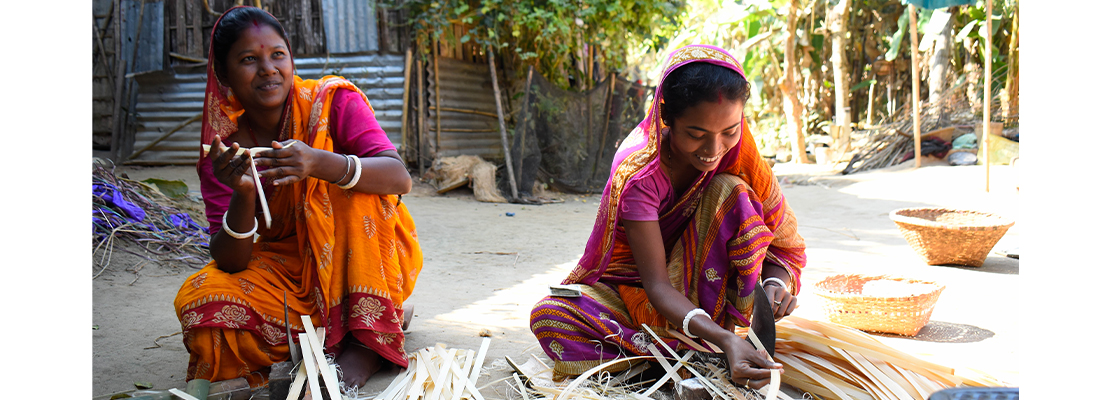
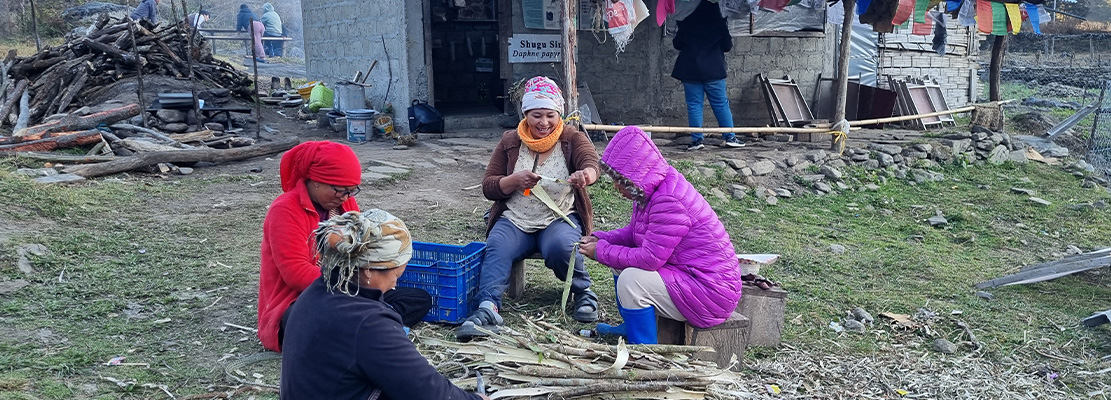
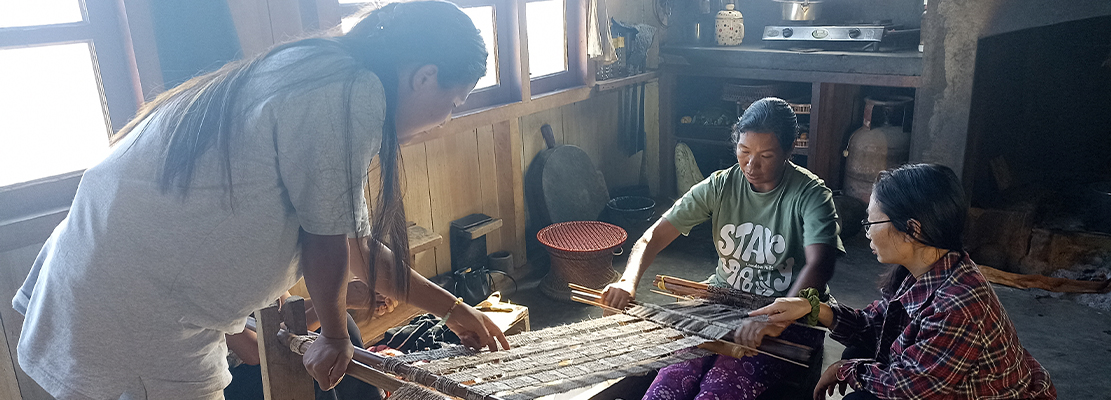
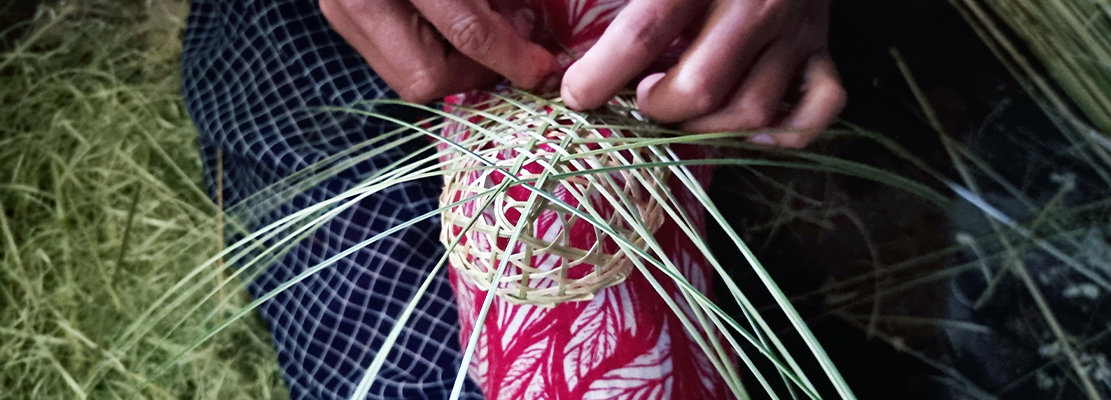
The project showcases the traditional crafts of Arunachal Pradesh, Assam, Manipur, Meghalaya, Mizoram, Nagaland, Sikkim, and Tripura developed through a collaborative dialogue between the artisans and the project team.
The project was initiated in late September and began with the NID Team travelling widely through the region to engage with artisan communities and alumni, while also drawing on the institute's rich research experience in the region. Over the next month and a half, with the Rashtrapathi Bhavan team working in close collaboration, through extensive iteration and discussion with multiple stakeholders, the dialogue evolved into the artefacts we now see in the invitation. A conscious effort was made to represent the rich diversity of crafts while acknowledging the seasonal nature of material procurement and the logistics of a distributed production process involving multiple individuals along the craft ecosystem. Each artefact is unique and has been designed as a confluence of elements reflecting the distinctive material cultures that shape daily life in each state, the people’s mastery of unique handicraft techniques, the natural ecosystems that sustain their homes, and contemporary cultural references.
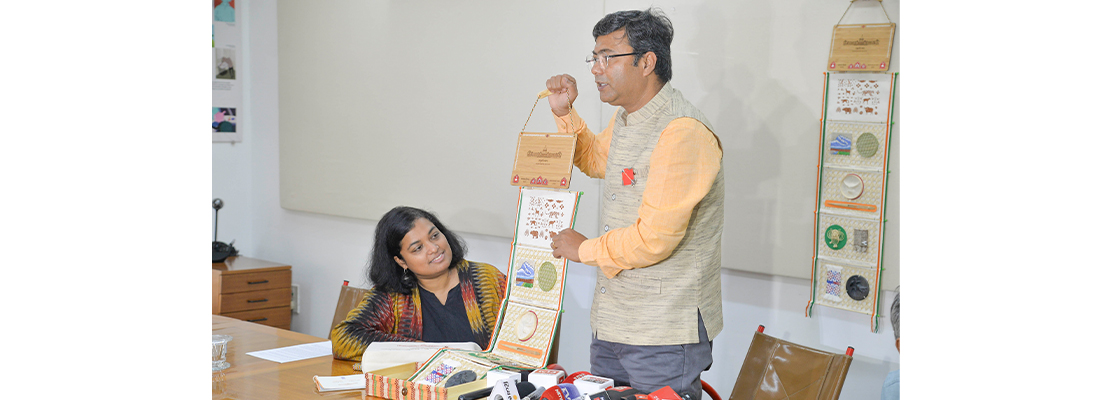
Over 350 artisans collaborated with the NID Ahmedabad team, headed by Prof. Andrea Noronha and Prof. Dr C.S. Susanth, under the leadership of Dr Ashok Mondal, Director NID Ahmedabad, along with a number of NID faculty members, alumni, students, and technical staff over a 3-month period to realise this project. The invitation kit was realised through connecting NID teams in Ahmedabad and Bengaluru with over 200 skilled artisans working directly from their villages. The result is a tactile tribute to the region's material culture, and this invitation offers a glimpse into the artistry and community effort that go into every kit.
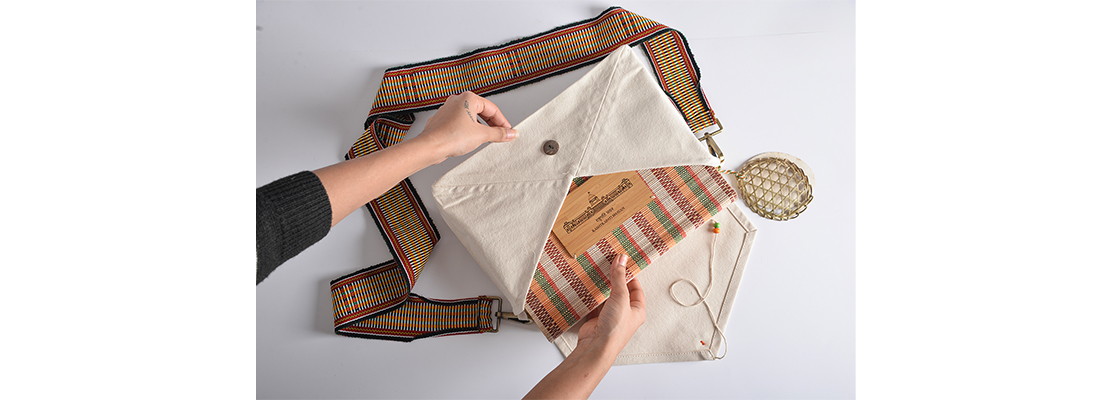
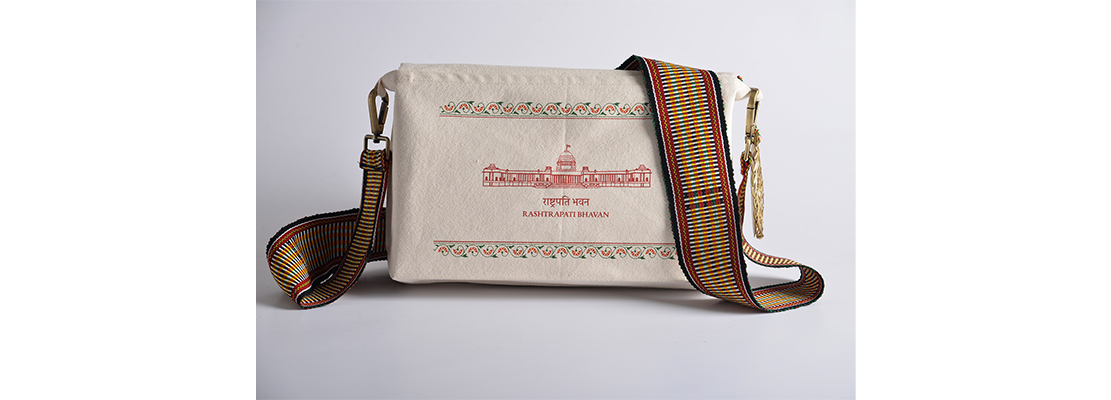
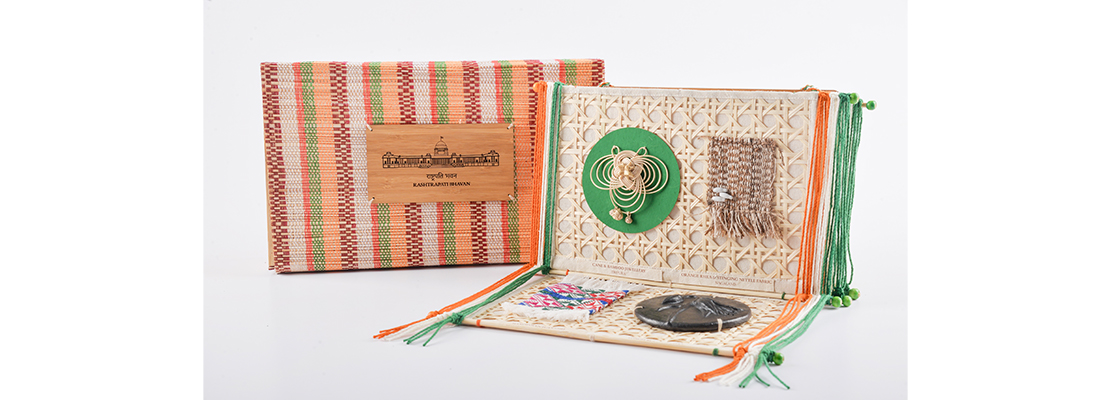
Handloom weaving is deeply rooted in the everyday life and culture of India’s North Eastern region. Each state and community has its own distinct textiles, patterns, and techniques, reflecting the region’s rich ethnic diversity. Handloom weaving also plays a vital role in sustaining livelihoods, especially for women artisans. Attached to the cover of your invitation package is a colourful belt, crafted using one of these unique handwoven textiles.
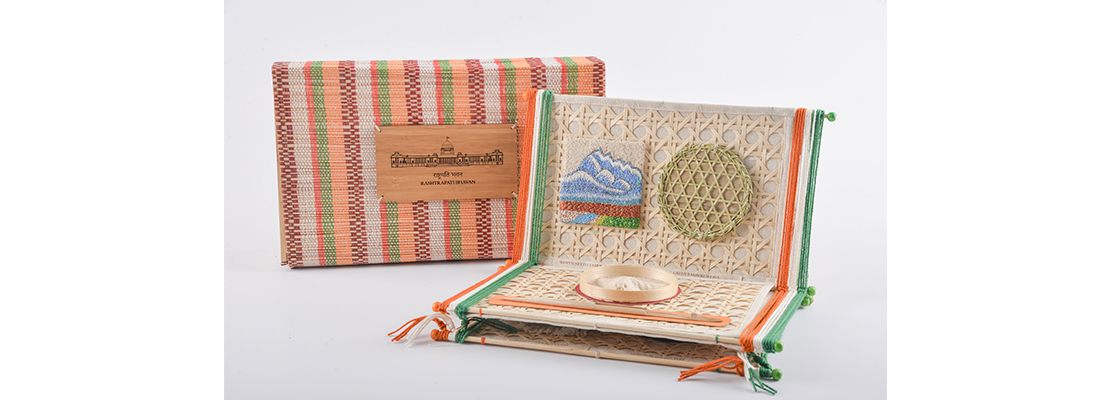
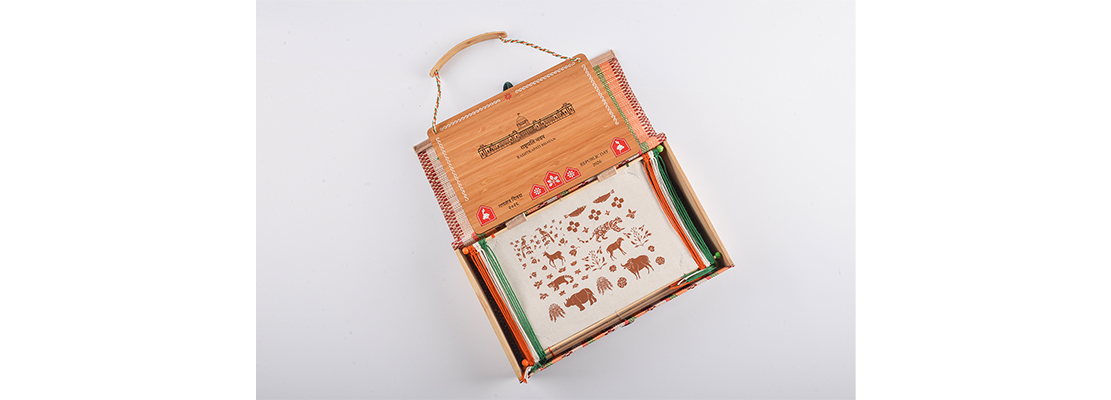
Invitation cover and box - Bamboo is central to the economy and culture of India’s north-eastern region, providing livelihoods through weaving, construction, and traditional crafts. Its fast growth and versatility also make it vital for eco-friendly development. The invitation box uses a woven bamboo mat, created on a loom with dyed cotton threads on the warp, and fine bamboo splits on the weft: a technique commonly used in the state of Tripura. The handmade paper tag that holds your address on the outer cover is accompanied by a bamboo ornament crafted in Meghalaya, with a specially smoked bamboo split that gives it a rich brown colour.
The decorative motifs on the cover and the box draw inspiration from the Assamese manuscript painting style, whereas the motifs on the fabric panel, under the invite, represent the flora and fauna of the north-eastern states.
Wall Hanging Scroll - Constructed using an octagonal bamboo weave pattern, this bamboo mat scroll unfolds to reveal an artistically curated display of handcrafted creations from each of India’s north-eastern region. The structure of the scroll and tri-colour threads also evoke the shape of the loin-loom, a portable weaving tool used particularly by women in the region, to create distinctive textiles.
Woven Nettle Fabric & Embroidery, Sikkim - Sikkim's distinctive Lepcha weaving or 'thara', traditionally uses yarn from the stinging nettle plant (sisnu). Today, modern Lepcha weaving also uses cotton and wool with nettle yarn to create colourful fabrics on loin looms. According to Lepcha legend, the community was created from the pure snow of Mount Kangchendzonga. This design reflects this ancestral connection to the mountains and honours Kangchendzonga National Park - India’s first UNESCO ‘Mixed Heritage Site’.
Green Bamboo Weave, Meghalaya - In the East Khasi Hills of Meghalaya, Mawsynram boasts not only the highest rainfall on earth but also a sophisticated bamboo weaving community. The raw bamboo used in the region has naturally water-resistant fibres which retain a greenish hue, unusual for other bamboo species. This woven green bamboo coaster echoes the commonly used rain shield or 'knup', with two layers of finely split bamboo woven into the hexagonal open weave, with a layer of palm leaves sandwiched between them – creating lightweight and durable protection from downpours.
Mon Shugu Paper, Arunachal Pradesh - In the West Kameng district in Arunachal Pradesh, the Monpa people forage in the forests to gather the inner bark of the shugu sheng shrub. The bark is boiled, beaten into pulp, then diluted. This mixture is poured into frames and left to dry, forming sheets of paper. The resulting material has high tensile strength, making it resistant to tearing. Mon Shugu handmade paper is used for writing scriptures and also serves more utilitarian purposes. Here, this versatile paper has been shaped by hand into the distinctive silhouette of the Mithun, the state animal of Arunachal Pradesh.
Gogona, Bamboo Jaw Harp, Assam - Rongali Bihu, the Assamese New Year, is greeted with the melodious twang of the Gogona, joined by the 'dhol' and 'pepa', welcoming the joys of spring. Gogona, a jaw harp made of bamboo, is an iconic part of these celebrations. The instrument is subtly adapted depending on the user. The Ramdhan Gogona for men is shorter, broader and heavier; while the Lahori Gogona is tucked into the tresses as a hairpin during dances. The children’s Gogona, which you see on the scroll, is smaller and lighter, and is the easiest to play.
Cane & Bamboo Jewellery, Tripura - In Tripura, skilled tribal craftspersons create exquisite jewellery and decorative items from finely split strips of bamboo and cane. These natural materials are shaped and woven into intricate designs that are light and durable. While the designs are sophisticated, they are made with simple local tools and natural adhesives - demonstrating the imagination, dexterity, and skill of the artisans.
Orange Wild Rhea and Stinging Nettle, Nagaland - Adorned by the Khiamniungan Naga tribe of Nagaland, this textile carries with it a deeper story of renewal of lost traditions. This rare cloth is made from stem fibres of the wild orange rhea plant and Himalayan stinging nettle – known locally as Ehlon Niu. Women gather the fibres from the wild, hand-split them into fine strands, and spin them into yarn. The finished yarn is then handwoven into this extraordinary fabric. Born amid challenges, it has now become a sought after fabric, symbolizing traditions and pride.
Handwoven Puan Chei, Mizoram - The Puan Chei is a shawl or wrap-around skirt that is commonly worn in Mizoram. Puan simply refers to clothing worn or used by the Mizo people; the suffix or prefix attached to puan indicates its specific purpose. Chei means ‘to decorate’, and Puan Chei refers to the more ornate garments worn by women on important occasions like festivals and weddings. The fabric is meticulously woven from cotton on loin looms, with threads carefully handpicked to create intricate geometric patterns
Longpi Black Pottery, Manipur - This age-old pottery technique has been used by the Tangkhul Naga tribe of Manipur since the Neolithic period to make utensils. Ground black serpentine rocks sourced from the Longpi hills combined with local clay make these objects unique. The utensils are shaped entirely by hand and then bisque-fired and polished with leaves, giving them their natural glaze. The pottery sample on the scroll depicts the Shirui Lily, the state flower of Manipur.
This invitation is a tribute to the skilled artisans and craftspersons of the Ashta Lakshmi states, who are keeping alive the age-old wisdom and diverse traditions of the region. Without them, the story of the cultural and artistic heritage of India’s North-Eastern region cannot be told.